 Skip to content

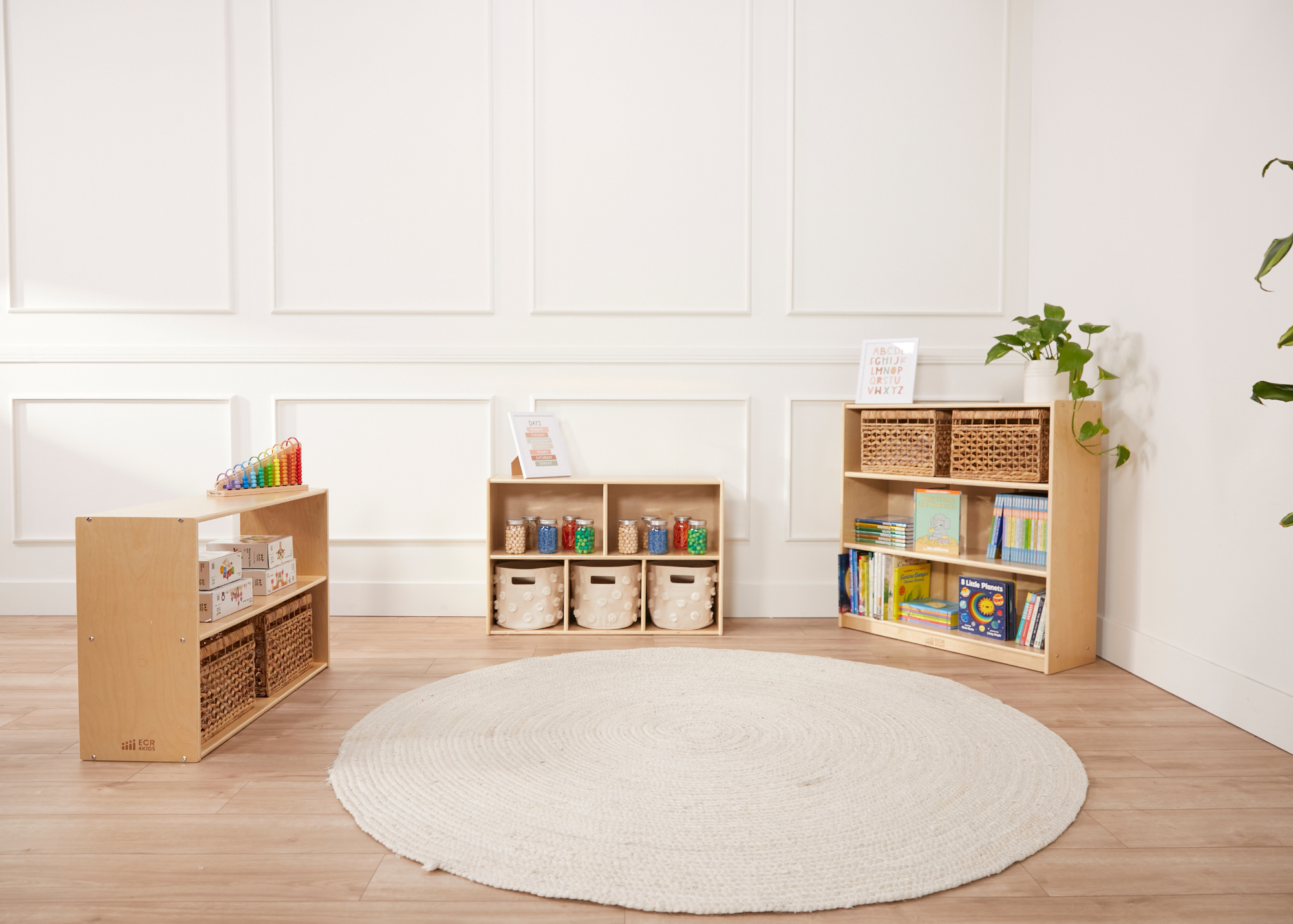
The classroom is a space that silently communicates expectations. Designing classrooms that support independence begins with environmental intention. When materials, layout, and routines are thoughtfully arranged, kids get the message that they can take ownership of their learning.
Start with a Space Built for Children
Accessible storage with materials displayed on open shelves, clearly labeled, and within little arm’s reach invites children to try without having to ask for permission. Child-height tables, furniture, hooks, and tools show kids that the space is built for them. Research consistently shows that thoughtfully prepared learning environments promote autonomy, executive functioning, and increase engagement—students can access what they need to direct their own learning.
- Keep materials visible: Open shelving and clear labels reduce “Where is it?” moments.
- Make it reachable: Place frequently used items at child height so kids can help themselves.
- Design for ownership: When the environment fits children, independence becomes the default.

Create Zones That Guide Learning
Clearly defined activity zones for collaborative group work, calm down corners, individual workspaces, and organized storage give classrooms a functional structure. Each zone has a purpose, but none are fixed. Lightweight furniture makes it easy to rearrange and respond to evolving interests.
The reading corner becomes a campfire with a makeshift tent. The engineering zone can incorporate a rotating list of student-selected materials like wooden blocks, foam bricks, cardboard tubes, and cars. Create spaces that can shift and change alongside the imagination.
- Group work area: Flexible seating and clear boundaries support collaboration.
- Calm-down corner: A consistent, comforting spot helps students regulate.
- Independent workspace: Quiet tables or nooks encourage focus and persistence.
- Materials hub: A “grab-and-go” area streamlines transitions and clean up.

Use Predictable Routines to Grow Confidence
Independence feels safe to grow when there are predictable routines and transitions. A wireless doorbell chime can signal a shift in activities, and a cleanup song lets kids know it’s time to put materials away. Set up shared cues that students recognize and respond to automatically, with confidence.
Visual charts outline routines, and rotating class jobs reinforce a sense of responsibility and belonging. Structured choices provide freedom within boundaries—like letting kids choose the order in which they complete tasks.
- Use consistent cues: Sounds, songs, or visuals that signal “what’s next.”
- Post routine charts: Simple visuals help students follow steps independently.
- Build responsibility: Class jobs make ownership a daily practice.
- Offer structured choices: Freedom within boundaries supports decision-making.
Organize Materials for Independent Movement
Organize materials in reachable bins so children can move independently between tasks, select what they need, and regulate themselves in calm spaces when necessary. These small systems offer daily opportunities to practice decision-making and sequential thinking.

Classroom tip: Keep “high-use” items (paper, markers, scissors, glue) in the same location year-round. Consistency reduces dependence and supports smoother transitions.
Invite Students into the Design Process
Create a rotating “student design team” to reimagine one learning zone each month. Invite students to share their ideas and post suggestions for what to explore next. For example, let kids choose the monthly theme for the dramatic play station—vet, grocery store, post office, bakery, and more.
Give kids a voice in classroom design and bring their creative ideas to life. Incorporating student choice demonstrates that they are meaningful contributors to the learning environment.
- Assign a monthly zone: Choose one area to refresh together.
- Collect ideas: Use sticky notes, drawings, or quick class votes.
- Rotate themes: Keep interest high with student-led changes.
- Celebrate contributions: A small “Designed by…” sign builds pride and ownership.

Independence Grows Where the Environment Supports It
The classroom should reflect its learners with purposeful and flexible spaces that adapt to their needs and interests. Intentional environmental design creates opportunities for personal choice and self-directed learning. Students in environments that empower shift from participants to leaders of their own learning.
Try this tomorrow:
- Lower one shelf of high-use materials to child height.
- Add 3–5 simple labels with pictures to your most-used bins.
- Introduce one predictable transition cue (chime, song, or visual).
