 Skip to content

This time of year often brings the urge to refresh classrooms and homes. One simple way to reset a learning environment is through toy and book rotation. In Montessori-inspired spaces, rotation helps children engage more deeply with fewer materials while keeping their curiosity piqued.
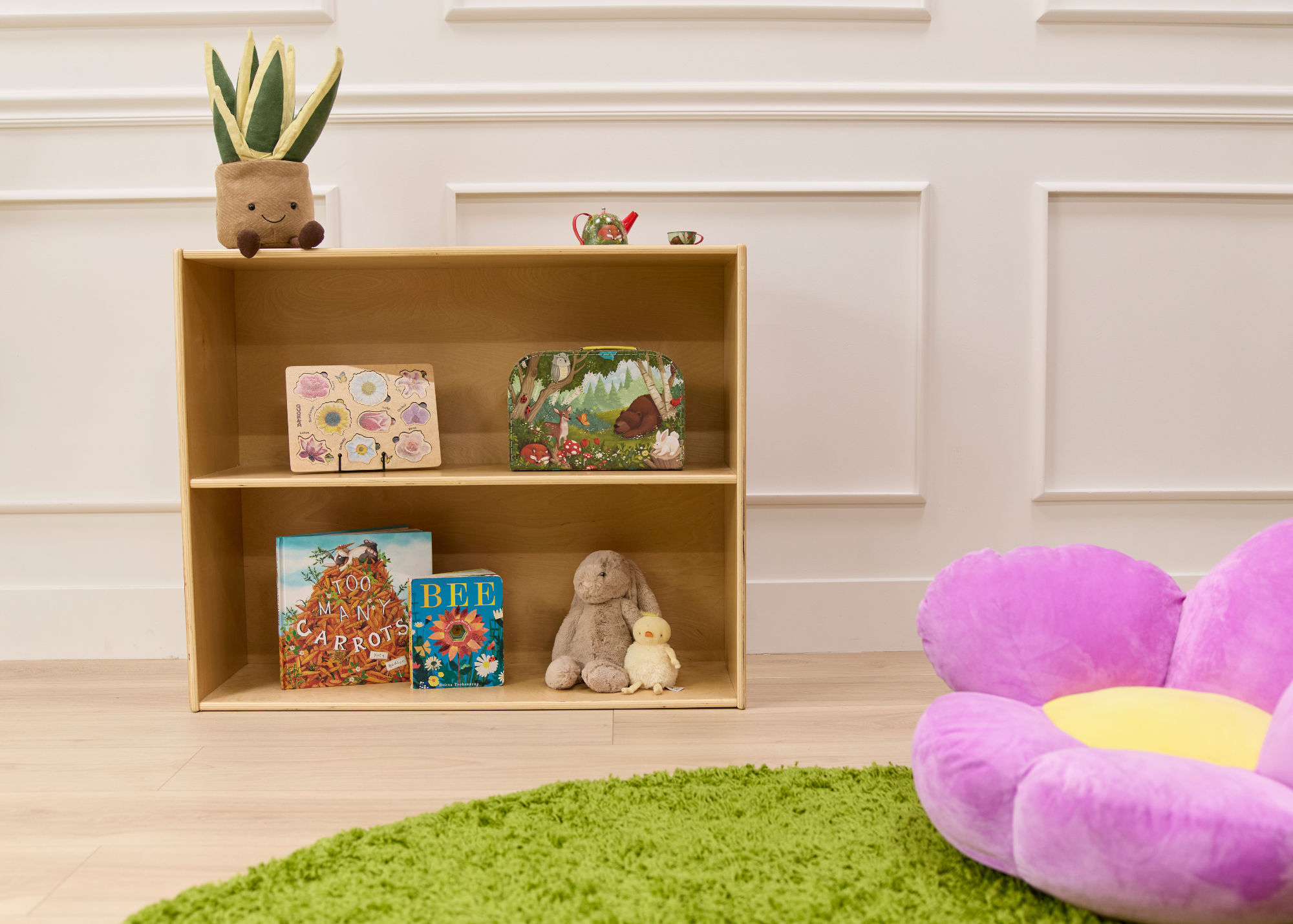
Montessori classrooms are designed to offer a small number of thoughtfully chosen items. Materials are placed neatly on low, open shelves so children can easily see what is available and independently choose their work. When everything has a place and only a limited number of items are displayed, children often focus longer, explore more thoughtfully, and return materials when finished.
Here are simple ways to introduce toy and book rotation in classrooms or home learning spaces.
- Start with a Small Number of Materials. Begin with low shelves displaying only a few thoughtfully chosen items. When children can easily see what is available, they are more likely to explore materials deeply and return them when finished. A simplified shelf can encourage longer attention spans and more purposeful play.

- Create a Simple Rotation Schedule. Every 1–4 weeks, take a moment to observe what children are actually using. Which materials are chosen repeatedly? Which ones are ignored? If interest fades, swap a few items for others that haven’t been seen in a while. Rotation keeps familiar materials feeling fresh without constantly adding new toys.
- Store Extra Materials Out of Sight. Toys and books are easy to accumulate, and overcrowded shelves can feel overwhelming. Store additional items in labeled bins, cabinets, or closets. When materials are rotated back into the space after a break, they often feel new again and spark renewed interest.
- Pair Books with Children’s Interests. Rotate themed book baskets alongside toys and activities. If children are building animal habitats with blocks, place books about animals, oceans, and wildlife nearby. If they are fascinated by construction vehicles, offer books about trucks, building, and how things are made. Connecting books to play can strengthen literacy and curiosity.

- Observe How Children Interact with Materials. Watch how students engage with the items on the shelf. If a toy is frequently misused, consider whether it may be too easy, too difficult, or simply ready for a break. Observing these interactions helps educators adjust materials to better support learning and development.
- Build on Skills from One Rotation to the Next. Each rotation is an opportunity to extend learning. For example, if a child spends time using lacing cards, the next rotation might introduce beading. The core skill remains the same—fine motor development—but the new material adds a fresh challenge and deepens engagement.
When children spend more time with a single material, they practice problem solving, strengthen concentration, and build confidence. Sometimes even a small change on the shelf can inspire renewed curiosity and deeper play.
For more ideas on creating thoughtful learning environments, read our blog on designing learning spaces with intention.
